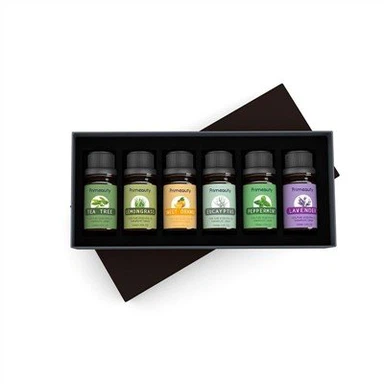
What exactly are essential oils?
Mar 14, 2022
What exactly are essential oils? Essential oil, the English name is essential oil, is a kind of secondary metabolite that exists in different parts of plants such as flowers, leaves, stems, roots or fruits. It is mostly a volatile aromatic oily liquid at room temperature, mainly composed of terpenes, alcohols compounds, phenols, aldehydes, esters, ketones and other compounds. The compound components contained in each plant essential oil range from a dozen to hundreds of species, and the content of each component is not fixed, which will vary greatly with the plant variety, place of origin, habitat, growth period, etc. Among them, the main components of the most famous lavender essential oil are linalool and linalyl acetate↓↓:
These compounds are also important aroma components of essential oils. The cool smell of essential oils is mostly emitted by compounds such as borneol, borneol acetate, and eucalyptol. If the content of camphor in the essential oil is too high, it will affect the smell of the essential oil and reduce the quality of the essential oil. These essential oils with their unique scents and effects are combined in different proportions to form the unique and recognizable aroma of each essential oil. If you want to know what chemical components are in a certain essential oil, you need to use gas chromatography-mass spectrometry (GC-MS) to calculate and compare the retention index with the n-alkane mixture as a standard, and you can get from the database. know the structure of the compound. Interestingly, although the chemical composition of various essential oils is significantly different, many chemical components can be found in a variety of plant essential oils due to the similar synthetic pathways, such as common pinene, limonene, bornyl acetate, terpinene, thujacene, etc. The reason why essential oils have the functions of bactericidal, anti-inflammatory, sedative and hypnotic, and lightening of scars is also because they contain these biologically active chemical components.